We’re all going on a summer holiday.
It took a few days for the bomb’s effects to become clear.
The first vague hints came with the emergence of a grainy video, released almost simultaneously on a clutch of paramilitary websites and some of the greyer peer-to-peer networks. “With this action,” the masked narrator declaimed, “we have dealt the Little Satan a mighty blow. No more will it play host to peoples of all nations. Now it is truly a pariah.” The rest was long on rhetoric; short on explanation: the usual stew of obscure factionalist scores being settled and incomprehensible morality being double-thought.
A more coherent answer was supplied by the intelligence services, which swiftly apprehended a group of suspects based around the Norwich area. “They” quickly made it known, through the usual officially unofficial channels, that they’d been watching the cell for some time. The plotters, they explained, had originally targeted the financial services sector, London’s mightiest engine. But they had found the City truly impenetrable, thoroughly fortified during the decades it had spent under siege from terror.
Thus, the adversary had moved on to the next target of economic opportunity: tourism. The results were as baffling as they were devastating. The device, detonated on the triple-witched beginning of the Spanish, Italian and American summer vacations that year, had killed no one. But it had removed every single tourist from the Big Smoke’s alternately sweltering and showered streets. Like a neutron bomb, it had seemingly evaporated the people, but left the buildings standing.
No exchange students; no silver-haired golden oldies. No hitch-hikers, no jet-setters; no weekenders, no backpackers. Suddenly, the piazza of Covent Garden was once again broad and empty. No cameras flashed futilely against the neon glare of Piccadilly Circus. The Guard changed in privacy and the Colour trooped alone. Open-topped buses roamed the streets, lobotomised and feral in their hunger for passengers. Pigeons, deprived of table scraps, starved in the streets.
The consequences were grave.
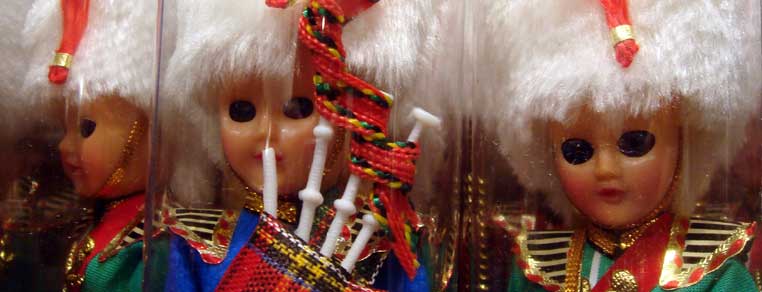
Desperate shopkeepers lined Leicester Square, brandishing Busbied soldiers in plastic tubes, berating passers-by who refused their entreaties to come see their wide range of mugs emblazoned with the Royal Family. In despair, they smashed their porcelain models of Tower Bridge, set fire to their Union Jack tea towels, ripped the pages from their books of Cockney rhyme. Postcards of breasts disguised as mice fluttered in the summer breeze, piling up in gutters like sheaves of premature leaves.
Hotels, too, struggled to adjust to the precipitous decline in occupancy rates. It was estimated that the population of the Gloucester Road area had dropped by three-quarters. From flophouse to penthouse, no hostelry was too humble or too grand to be affected. Restaurants abandoned all-you-can-eat in favour of whatever-you-can-get – although by some anomaly, the Caledonian steakhouses of Soho festered on, even though their red-velvet banquettes were now almost entirely empty.
And yet Londoners somehow found the strength to carry on. Faced with this insult to all they held dear, they invoked, once again, the Spirit of the Blitz. In respectful remembrance, they boarded the capital’s trains and buses, now woefully punctual and capacious. Solemnly, they paced the streets, stiffening their lips when confronted with the sudden absence of companiable crush. No comradely rucksack in the face, no teetering piles of luggage to negotiate; no zigzag slaloms to the top of the escalators.
No more did their ears delight in the cheery cries from vendors of birdsong whistles and sketchers of celebrity caricatures. No more did their eyes rejoice in picturesque offers of cheap pasta, lodging or internet access. No more were their noses delighted by the sweet scent of candied peanut, or the tangy fumes of idling coaches. No more did they idly banter with bronzed living statues, boisterous nightclub promoters or shy promoters of English lessons.
With quiet fortitude, the people of London soldiered on. A proud people, they declared that they would labour honestly under the burden that had been thrust upon them: and that they would be satisfied with the remaining pleasures of their denuded city. Somewhat to the surprise of their friends elsewhere, they rejected all offers of help in assistance in rebuilding their crushed tourist industry. Somehow, they said, they would make do without it.
But what of the missing tourists? It quickly transpired that most had been transported, in the blink of an eye, to a hitherto deserted atoll in the South Pacific. Most quickly took up their governments’ offers of repatriation; but a few decided to stick it out. Their Babel of languages quickly transmuted to a lilting Creole; culinary traditions collided, and then fused; and the new islanders quickly developed a range of unique diversions that hybridised the favoured recreations of their homelands. After a few years, they could truly claim to have created Paradise on Earth.
It was not long before the first flight touched down from Heathrow. ##

Mass tourism seems to me to be one of those phenomena that run rampant because its benefits are easily measurable in hard currency, while its detriments are less tangible and easier for policy-makers to ignore. I think easy international travel is one of the enormous privileges of the modern age, and it’s a pity that one of its by-products has been a nasty, exploitative and environmentally ruinous industry that enables insular and disrespectful travellers to avoid having their minds broadened by contact with local customs and people.
London is, of course, a big city and able to take care of itself (at least compared to, say, the Maldives); but even so, the impact of millions of tourists is considerable. Central London is much more civilized, and certainly more navigable, during the increasingly brief low season between the summer and winter holiday seasons. And despite headlines shrieking about the cataclysmic loss of tourist dollars (and euro, and yen, and the rest) I’ve found that I am not alone in being glad of the reprieve when terrorism or disease has deterred tourists from visiting.
I’ve frequently wondered what London would be like if there were no tourists. That’s where this story comes from. The title is, of course, a reference to 28 Days Later; and this story’s musical inspiration was In the House, from John Murphy’s soundtrack. I was listening to that track as I crossed Westminster Bridge one sunny afternoon – the same bridge that Jim, in the film, walks down in splendidly spooky solitude. The contrast with my stuttering progress through gawping crowds and hectoring crap-merchants could not have been greater.
Where did this story come from? When did you write this? How? WOW! Startling idea, amazing writing packed with really juicy images, that despite it being 6.28 am I’m reading again to savour! Particularly strong hits for me are:
“Open-topped buses roamed the streets, lobotomised and feral in their hunger for passengers.”
and
“Postcards of breasts disguised as mice fluttered in the summer breeze, piling up in gutters like sheaves of prematurely autumnal leaves.”
and
“Restaurants abandoned all-you-can-eat in favour of whatever-you-can-get – although by some anomaly, the Caledonian steakhouses of Soho festered on, even though their red-velvet banquettes were now almost entirely empty.”
So witty and so true and clear that the writer is smitten by this city despite all her foibles and faults. Poetic.
People in London need to read this: I love the way the humour works as a defiant finger to terrorism.
Funnily enough, a friend of mine is meeting an old acquaintance as they stop off on one of these tours. It lasts 17 days and is costing them £4K a head. For this privilege, they get to do Stratford upon Avon for lunch and a show and then York the same afternoon. They spend one sleepover in Warrington, of all places. The primary reason you’d sign up for one of these things is “because it’s safer”. Because Stratford-upon-Avon, God knows, is the Murder Capital of the Midlands…
Annoying as they are, I am greatly inclined to pity tourists, as having been despised and ripped-off on my own travels, I am still not sure whether I would like to face down a lifetime of staying home and out from under other people’s feet…
I want to visit the Atoll of Lost Tourists though.